

How Are THC Drinks Legal? The 2018 Farm Bill Explained
You're standing in a convenience store, staring at a cooler full of THC seltzers next to the energy drinks. Wait—how are THC drinks legal when cannabis is still federally controlled? The short answer: a 2018 legislative twist and a very specific chemical threshold. The longer answer involves hemp definitions, state patchworks, and a ticking clock on the federal rules that made this whole category possible.
If you've asked yourself "are THC drinks legal," you're not alone. The landscape shifted overnight in 2018, grew wildly through 2025, and is about to shift again. Here's what you need to know about how your THC seltzer became federally legal, why that's changing, and what it means for your cooler right now.

The 2018 Farm Bill, In Short
Congress redefined "hemp" as cannabis containing no more than 0.3% delta-9 THC by dry weight. That narrow chemical line removed hemp—and the THC in hemp—from the federal Controlled Substances Act.
That's it. That's the loophole that launched a thousand seltzers.
What Hemp-Derived THC Actually Means (Legally Speaking)
The 2018 Farm Bill didn't legalize cannabis. It split the plant into two regulatory categories based on chemistry, not botany. If your product tests at or below 0.3% delta-9 THC on a dry-weight basis, federal law treats it as hemp. Cross that threshold and it's marijuana—Schedule I, federally illegal.
Here's where it gets interesting for beverages. A 12-ounce can weighs roughly 340 grams. Under the 0.3% delta-9 threshold, that can could theoretically hold over 1,000 mg of delta-9 THC and still qualify as "hemp." In practice, most hemp-derived THC drinks contain far less per serving—well within the federal limit—but that technical wiggle room is what made the category viable.
Hemp-derived delta-9 THC is chemically identical to the THC in marijuana. Same molecule, same effects. The only legal difference is the source plant's total concentration and how the finished product is measured. That distinction opened the door for legal THC seltzers, gummies, and spirits sold outside state-licensed cannabis dispensaries.
Why Your THC Seltzer Is Federally Legal But State-Regulated
Federally legal doesn't mean unregulated—or universally available. The 2018 Farm Bill removed hemp from the Controlled Substances Act, but it didn't touch food and drug law. The FDA maintains that adding THC or CBD to food or beverages sold in interstate commerce remains unauthorized, creating a legal gray zone that brands navigate through state-level frameworks and intrastate models.
Meanwhile, states have built their own rules. Some embraced hemp THC beverages with clear regulations. Others banned them outright or routed them into existing cannabis licensing systems. The result is a patchwork where the same can might be sold at a gas station in Minnesota, restricted to licensed dispensaries in Washington, and completely prohibited in Idaho.
This isn't unusual in cannabis policy—medical and recreational marijuana programs have always been state-by-state—but the hemp beverage category sits in a uniquely awkward position. It's federally non-controlled but not federally approved for consumption, which leaves compliance to fifty different state interpretations.
Where THC Drinks Are Legal (And Where They're Contested)
The states where you can legally buy hemp-derived THC beverages fall into three broad camps: regulated markets, restrictive markets, and prohibition states.
Regulated Markets
Minnesota built one of the clearest frameworks, capping beverages at 5 mg THC per serving and 10 mg per container, requiring 21+ age verification, mandated lab testing, and specific labeling. Products are sold in bars, restaurants, and retail stores under "lower-potency hemp edibles" rules. It's proof that a state can regulate hemp THC drinks like alcohol—clear limits, clear compliance, clear retail channels.
New Jersey took a different route in 2026, allowing sales of intoxicating hemp beverages only through alcohol or cannabis licensees and setting a sunset date of November 13, 2026—aligning with looming federal changes. After that, such products will be treated as cannabis items under the state's adult-use program.
Restrictive Markets
Washington State requires any product with detectable THC to be sold exclusively through licensed cannabis retailers. No convenience stores, no online DTC. If it gets you high, it goes through the regulated cannabis supply chain.
Colorado prohibits chemically modified or converted cannabinoids (such as CBD synthesized into delta-8 or delta-10) in hemp products sold as food, effectively narrowing what qualifies as compliant hemp-derived THC in the state.
Prohibition & Contested States
Idaho, Kansas, and a handful of other states have banned intoxicating hemp products entirely, regardless of federal hemp status. Even within permissive states, cities are passing their own restrictions—Chicago enacted a municipal ban on hemp-derived intoxicants in early 2026 as federal changes loomed.
If you're asking "where to buy hemp derived THC drinks," the answer depends entirely on your ZIP code.
What Recent Legislation Could Change in 2026 and Beyond
Here's the part that changes everything. On November 12, 2025, Congress enacted Public Law 119-37 (H.R. 5371), and buried in Section 781 is a redefinition of hemp that becomes effective November 12, 2026—exactly one year from enactment.
The new federal hemp law makes three major changes:
- Total THC standard: Instead of measuring only delta-9 THC, the definition now includes THCA (the acid precursor that converts to THC when heated). This mirrors how most states already test hemp.
- Synthesis exclusion: Cannabinoids manufactured or synthesized outside the plant no longer qualify as "hemp." This targets chemically converted products like delta-8 derived from CBD.
- 0.4 mg per-container cap: Final hemp-derived consumer products can contain no more than 0.4 mg of total THC (plus cannabinoids with "similar effects") per package.
That last point is the big one for beverages. Most hemp THC drinks on shelves today contain far more than 0.4 mg per can. Under the new rules, they won't qualify as "hemp" after November 12, 2026—unless Congress amends or delays the provision.
According to Congressional Research Service analysis, the intent is clear: narrow the intoxicating-hemp loophole and return higher-dose THC products to controlled status. Some brands are planning transitions to state-licensed cannabis channels. Others are watching for legislative fixes. A few are reformulating to non-intoxicating, CBD-forward profiles that can stay under the 0.4 mg cap.
Will THC drinks be banned? Not outright—but the federal pathway that made them widely available is changing. The future of hemp-derived THC beverages will likely look more like traditional cannabis retail: state-licensed, age-gated, and dispensary-sold.
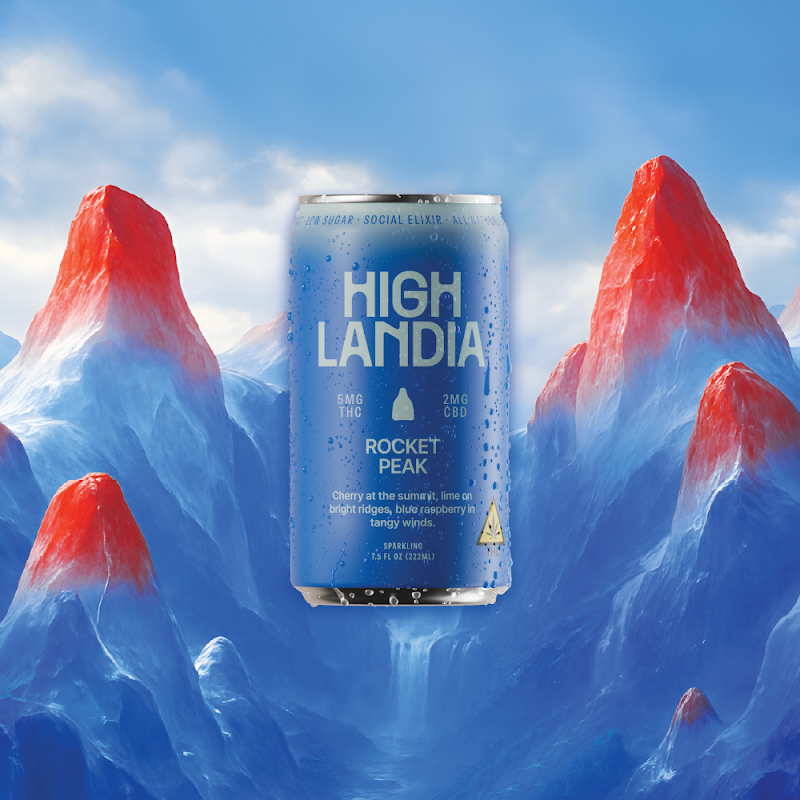
How Highlandia Stays Compliant
At Highlandia, we've never treated compliance as a checkbox. It's the foundation of trust—and right now, that foundation is shifting under the entire industry.
Today, our drinks and edibles are federally legal, made with hemp-derived, Farm Bill–compliant THC containing less than 0.3% delta-9 THC by dry weight. We don't ship to states whose current regulations restrict our products, we require age verification for every purchase, and every batch is third-party lab tested with published Certificates of Analysis so you can see exactly what's in the can.
Our THC is hemp-derived and plant-produced—no synthesized or chemically converted cannabinoids. And as the November 2026 changes approach, we're tracking the rules closely in every state where travelers find us, so the path to Highlandia stays legal, transparent, and open to adults.
The category is changing, but the commitment stays the same: transparency, safety, and legal pathways for adults who want a premium THC beverage experience. We're not interested in loopholes. We're interested in doing this right.
Your Cooler in 2026 and Beyond
So, how are THC drinks legal? For now, through a narrow federal definition of hemp and a state-by-state regulatory patchwork. After November 2026, most intoxicating hemp beverages will no longer fit that definition—but that doesn't mean they disappear. It means they migrate to the systems designed for adult cannabis access: licensed, tested, and sold with the same rigor as any regulated intoxicant.
The data tells a story of explosive growth—135% year-over-year sales increases, mainstream retail expansion, and consumer demand that isn't going away. What's changing is the legal scaffolding, not the appetite for a better, cleaner buzz.
If you're exploring hemp-derived THC beverages, do it now with eyes open. Check your state's rules. Verify lab results. Buy from brands that publish compliance documentation and prepare for change. The window for widely available, federally non-controlled THC seltzers is shifting, but the category itself is just getting started—it's simply moving to where it probably belonged all along.
Ready to explore compliant, rigorously tested, transparently sourced THC beverages? Discover Highlandia's lineup—crafted to meet today's regulations and tomorrow's standards. Your cooler is about to get a lot more interesting.
Read more
You've been staring at the can for a full minute now, haven't you? Someone handed you a THC drink at a party, or you picked one up at the corner store, and now you're holding it like it might sprou...
Here's the question every traveler asks before boarding: How long until I arrive? Fair. Reasonable. Nobody books a flight without knowing whether it's a twenty-minute hop or a six-hour red-eye. The...