

Are THC Drinks Safe? A Plain Look at Lab Testing & Ingredients
You've seen them in coolers at the dispensary, on shelves at taprooms, maybe even at your corner store. THC drinks are everywhere now—sales topped $1 billion in 2024—and if you're wondering whether they're safe, you're asking exactly the right question.
The answer isn't a simple yes or no. It depends on where you buy them, what's inside them, how much you drink, and who you are. We'll walk through the specifics so you can make an informed call.
The Short Answer on THC Drink Safety
Are THC drinks safe? For most healthy adults, yes—when purchased from regulated sources, consumed in low doses, and never mixed with alcohol or driving.
The safety of THC-infused beverages hinges on three things:
- Third-party lab testing that verifies potency and screens for contaminants
- Transparent, food-grade ingredients with no sketchy additives
- Responsible use—meaning clear dosing, no redosing too soon, and understanding your own health context
The risks climb fast when any of those three break down. Unregulated hemp-derived drinks sold outside dispensaries often lack rigorous testing. Independent lab studies in 2024 found frequent mislabeling of THC content and some products with elevated pesticide residues in the hemp beverage market.
If a THC drink doesn't come with an accessible Certificate of Analysis and clear dosing info, it's not worth the gamble.
What a Real Certificate of Analysis (COA) Shows
A Certificate of Analysis is your safety net. It's a lab report that tells you exactly what's in the can—and what isn't.
States like New York require a scannable QR code on every product that links directly to the batch-specific COA. California and other regulated markets demand similar transparency. If you can't access a COA before you buy, that's your first red flag.
What to Look for on a Legitimate COA
A real COA from an ISO/IEC 17025-accredited lab will show:
- Batch and lot number matching the product in your hand
- Potency per serving and per container—exact milligrams of delta-9 THC, CBD, and other cannabinoids
- Contaminant screening with pass/fail results for pesticides, heavy metals (lead, arsenic, cadmium, mercury), residual solvents, microbial pathogens, and mycotoxins
- Lab name and accreditation so you can verify they're legit
- Date of testing to confirm the results are current
The potency number is critical. If the label says 5 mg THC per serving but the COA shows 12 mg—or 2 mg—you can't dose accurately. That's how people end up too high or disappointed.
Contaminant panels matter even more. Cannabis is a bioaccumulator; it pulls toxins from soil and water. A clean COA proves the product won't deliver pesticides or heavy metals along with your buzz.
Ingredient Red Flags to Avoid
Once you've confirmed the COA checks out, flip the can and read the ingredient list. Are THC drinks bad for you? Not inherently—but some formulations raise concerns.
Steer Clear Of:
- Added alcohol. Many states prohibit mixing alcohol and THC in the same product for good reason—combining the two sharply increases impairment and crash risk. If you see ethanol on the label, put it back.
- Added caffeine (in most contexts). Regulations vary, but California and other states restrict added caffeine in cannabis edibles and beverages. Naturally occurring caffeine from tea or coffee extracts may be allowed. The concern: stimulant-plus-intoxicant combos can mask impairment or spike anxiety.
- Unrecognizable chemical names or mystery additives. Premium THC beverages use food-grade ingredients you'd find in any craft soda or sparkling water—filtered water, real cane sugar, natural flavors, clean emulsifiers. If the ingredient deck reads like a lab experiment, it probably is one.
- Delta-8 THC or other unregulated hemp cannabinoids without a full COA. The FDA has flagged delta-8 products for hundreds of adverse event reports and inconsistent manufacturing. Some are fine; many aren't. Demand the same testing rigor as you would for delta-9.
- Packaging that mimics popular sodas or candy brands. Copycats signal a manufacturer that cuts corners. They also increase the risk of accidental pediatric ingestion, which is a public-health crisis.
Bottom line: if you wouldn't drink it without the THC, adding THC doesn't make it better.
Daily-Use Considerations and Tolerance
Can you drink THC beverages every day? Technically, yes. Should you? That depends on your goals and how your body responds.
Tolerance to THC develops with regular use—your cannabinoid receptors downregulate, meaning you need more to feel the same effect. For some people, a 5 mg serving that felt perfect on day one might barely register after two weeks of daily use.
Escalating your dose to chase the original feeling raises two risks: dependence and diminishing returns. Roughly 3 in 10 people who use cannabis develop cannabis use disorder, and daily use is a strong predictor.
If You're Using THC Drinks Regularly:
- Keep doses low and consistent rather than chasing higher peaks
- Build in off-days to let your receptors reset
- Track your use honestly—if you're reaching for a can every evening out of habit rather than intention, pause and reassess
- Pay attention to how you feel without it; if irritability or sleep trouble show up on off-days, tolerance may be tipping into dependence
There's no long-term human data yet on daily low-dose THC beverage use specifically, so we're all part of a live experiment. Approach it with curiosity, not overconfidence.
Do THC Drinks Affect the Liver or Kidneys?
This is one of the most Googled questions—are THC drinks bad for your liver? Are THC drinks bad for your kidneys?—and the research offers some reassurance, with caveats.
Liver
Current evidence does not link THC to clinically significant liver injury in the way alcohol does. (Very high therapeutic doses of CBD—far beyond the small amounts found in beverages like ours—can elevate liver enzymes.) THC is metabolized in the liver by CYP enzymes, so drug-drug interactions are possible if you take medications processed the same way. If you have existing liver disease or take multiple prescriptions, check with your doctor before adding THC beverages to the mix. And never, ever combine them with alcohol—your liver doesn't need the double shift.
Kidneys
A 2024 cohort study found no adverse kidney effects from cannabis use in people without chronic kidney disease (CKD). Among people who already had CKD, cannabis was associated with faster eGFR decline, though not independently with disease progression. Translation: if your kidneys are healthy, moderate THC use doesn't appear harmful. If you have CKD, talk to your nephrologist first.
Is THC seltzer safe for your organs? For most adults, occasional or moderate use poses minimal risk. Daily heavy use in the context of other health conditions is less studied and warrants medical guidance.
Who Probably Should Not Drink THC Beverages
Are THC beverages safe for everyone? No. Some people should skip them entirely or consult a healthcare provider before cracking a can.
Avoid THC drinks if you are:
- Pregnant, planning pregnancy, or breastfeeding. THC crosses the placenta and appears in breast milk; developmental risks to the fetus and infant are well documented.
- Under 21 (or 25, ideally). The brain is still developing into the mid-20s. Early and frequent cannabis use is linked to cognitive and mental health risks.
- Driving, operating machinery, or responsible for others' safety. Cannabis impairs reaction time, coordination, and judgment; effects can last hours even after you feel sober.
- Living with certain cardiovascular conditions. The American Heart Association notes that cannabis can increase heart rate and blood pressure and may elevate stroke or heart attack risk, especially in people with underlying heart disease.
- Managing chronic kidney disease, significant liver disease, or taking medications with narrow therapeutic windows. Drug interactions and altered metabolism are real concerns.
- Prone to anxiety, paranoia, or psychotic disorders. THC can exacerbate these conditions in susceptible individuals.
When in doubt, ask your doctor. "Is this safe for me?" is a better question than "Is this safe in general?"
How Highlandia Tests Every Batch
We can't control what other brands do. We can control what we do.
Every batch of Highlandia is third-party lab tested for potency, purity, and safety before it reaches your hands. That panel includes:
- Cannabinoid potency—verified milligrams of THC and other cannabinoids per can
- Pesticide screening—pass/fail against state action limits for dozens of compounds
- Heavy metals—lead, arsenic, cadmium, mercury within safe thresholds
- Residual solvents—ensuring extraction processes leave nothing harmful behind
- Microbial contaminants and mycotoxins—because clean water and ingredients matter
Every COA is published online, so you don't have to trust our word—you can verify the data yourself before you drink.
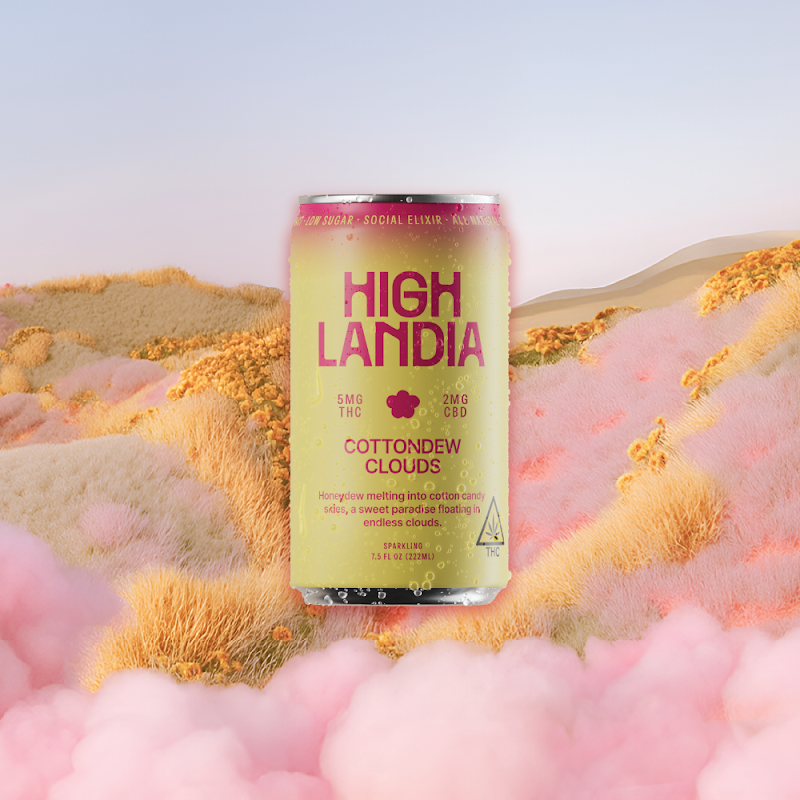
We also use food-grade ingredients you'd recognize from any premium sparkling beverage—carbonated filtered water, organic cane sugar, natural flavors, and hemp-derived Delta-9 THC paired with 2 mg of CBD per can. No added alcohol. No added caffeine. No synthetic dyes or fillers you need a chemistry degree to pronounce.
Our formulations are designed for a predictable, gentle onset—typically 15 to 30 minutes—and a duration that lets you enjoy the evening without writing off the next morning. Every flavor world—Cottondew Clouds, Rocket Peak, and Tangilime Grove—is crafted to the same standard: clean, consistent, worthy of your trust.
We're not perfect. No brand is. But we commit to transparency, rigorous testing, and treating you like the informed adult you are.
The Real Answer
Are THC drinks safe? They can be—when you know what to look for.
Buy from regulated sources. Verify the COA. Read the ingredients. Dose carefully and wait for the effects before reaching for another. Don't drive. Don't mix with alcohol. Know your own health context and respect the contraindications.
The safest THC drinks to buy are the ones that treat safety as non-negotiable, not as marketing. Lab testing isn't a nice-to-have; it's the baseline. Transparent ingredients aren't a bonus; they're the cost of entry.
If a brand won't show you the data, they're asking you to take a gamble. You don't have to.
Explore Highlandia's full line—every flavor, every batch, every COA—and see what it looks like when a THC beverage brand puts your trust first.
Read more
There's a question floating around the highlands, drifting through the mist near Tangilime Grove, bouncing off the cliffs at Rocket Peak: Are THC drinks healthier than alcohol? It's the kind of que...

Here's the question every traveler asks before boarding: How long until I arrive? Fair. Reasonable. Nobody books a flight without knowing whether it's a twenty-minute hop or a six-hour red-eye. The...