

Wisconsin THC Drinks: Where the Hemp Beverage Boom Was Born
Somewhere between the third coast and a state of mind, Wisconsin cracked open something unexpected: a portal disguised as a beverage can.
While neighbors debated dispensary zoning and legislators haggled over cannabis frameworks, the Badger State quietly became one of America's most vibrant THC drink markets—no adult-use cannabis law required. Just hemp, the 2018 Farm Bill, and a regulatory landscape wide open enough to let an entire industry bloom in bars, liquor stores, and yes, even the corner gas station.
Today, Wisconsin Public Radio reports that THC beverages are sold across hundreds of retailers statewide, with some producers scaling from 25,000 cans in 2023 to projections topping a million by 2025. You'll find them on tap in taverns, chilled next to craft beer in liquor aisles, and carried in the hands of curious explorers who've discovered that the best escape doesn't require a boarding pass—just a pull-tab and a sense of adventure.
Welcome to the Wisconsin THC drink scene: where the hemp beverage boom started, where it's thriving right now, and where it's headed next. Pack accordingly.
How Wisconsin Became One of America's Biggest THC Drink Markets
No one planned for Wisconsin to become ground zero for the hemp beverage revolution. It just sort of happened—the way the best discoveries often do.
The origin story starts federal. When Congress passed the 2018 Farm Bill, it redefined hemp as any cannabis plant containing ≤0.3% delta-9 THC by dry weight and removed it from the Controlled Substances Act. Suddenly, hemp-derived THC products—including beverages—were legal under federal law, provided they stayed under that threshold. Wisconsin aligned its state hemp statute in 2019 (Act 68) and handed grower licensing over to the USDA in 2022.
What Wisconsin didn't do: impose strict state-level caps on milligrams per serving, per container, or per package. Unlike Minnesota (which quickly set a 5 mg per serving, 10 mg per beverage limit) or Illinois (which funneled cannabis drinks exclusively through licensed dispensaries), Wisconsin left the door open. Hemp-derived THC beverages fell under general food law, weights-and-measures rules, and consumer protection—but no specific intoxicating-hemp regime.
The result? A market that moved fast. Bars started stocking THC seltzers alongside NA beers. Liquor stores added dedicated THC drink coolers. Festivals booked pop-ups. Local news called it "a new wave of cannabis cocktails." Brewers, beverage entrepreneurs, and curious travelers all saw the same thing: Wisconsin had become one of the most accessible, retail-friendly hemp beverage markets in the country.
By mid-2025, Forbes reported Wisconsin was among the first three states offering THC drinks on tap in bars, joining Minnesota and South Carolina in pioneering draft cannabis service. The Wisconsin THC drink scene wasn't just big—it was innovative, social, and unapologetically public.
Wisconsin's Current Legal Framework: Open Terrain (For Now)
If you're asking, "Are THC drinks legal in Wisconsin?" the short answer is yes—under current federal and state hemp law. The longer answer involves reading the regulatory map carefully, because the terrain is shifting.
What the law says today (June 2026):
- Federal baseline: Hemp-derived delta-9 THC beverages are legal if the plant material contains ≤0.3% THC by dry weight (2018 Farm Bill standard).
- State framework: Wisconsin adopted federal hemp definitions and transitioned oversight of hemp cultivation to the USDA. Consumer products like beverages are regulated under DATCP's labeling, weights-and-measures, and general food-safety authority—not a cannabis-specific licensing system.
- No statewide potency caps: Unlike Minnesota's explicit 5 mg per serving rule, Wisconsin does not currently impose state-level THC limits per can or per serving. (Some municipalities have explored local licensing, but statewide rules remain general.)
- Where you can buy them: Bars, taverns, liquor stores, some grocery chains, convenience stores, and gas stations. Age policies vary by retailer, though many voluntarily restrict sales to 21+.
- On-premise service: Wisconsin bars serve THC drinks chilled from the cooler and, increasingly, on tap via kegs—a format that mirrors craft beer culture and signals how deeply THC beverages in Wisconsin have woven into social drinking.
But here's where the map gets interesting: Wisconsin Watch notes the state's regulatory framework is fragmented, with gaps in enforcement, labeling consistency, and consumer protection compared to neighbors with clearer rules. And on the horizon—November 12, 2026—a federal rule change threatens to redraw the entire landscape.
The November 2026 federal shift:
A law signed in late 2025 redefines hemp federally, effective November 12, 2026. The new standard moves to total THC (post-decarboxylation, including THCA) and imposes a 0.4 mg total THC per finished container cap for any product to qualify as "hemp." That 0.4 mg limit is far below the 5 mg or 50 mg doses in today's market, meaning most current formulations will need to be reformulated, relabeled, or moved into state-regulated cannabis channels—if those channels even exist in Wisconsin by then.
Translation: Wisconsin's wide-open THC drink market has five months of guaranteed runway and a regulatory cliff ahead. Brands, bars, and lawmakers are all watching the calendar.
The Retailers and Bars Leading the Wisconsin THC Drink Scene
Wisconsin's THC drink boom didn't happen in boardrooms or via press releases. It happened at the bar rail, in liquor-store aisles, and at summer festivals where someone cracked a can and said, "Wait—this is legal here?"
On-premise pioneers:
Bars and taverns across Wisconsin have embraced THC seltzer as both a profit center and a vibe shift. From Milwaukee's craft cocktail lounges to northwoods supper clubs, bartenders now pour chilled THC drinks alongside NA options for the sober-curious and the adventure-curious alike. Wisconsin Public Radio spotlights bars that treat THC beverages as a natural menu addition—no fanfare, just another way to meet the evening on your own terms.
Some taverns have gone further, installing THC drinks on tap. Kegs of hemp-derived seltzers now flow from draft lines in select locations, giving Wisconsin one of the country's most bar-forward cannabis beverage cultures. It's a format that feels native to a state famous for its brewing heritage and its deeply social drinking traditions.
Retail leaders:
Liquor stores were early adopters, with independent shops and regional chains dedicating cooler space to THC drinks. You'll find them next to hard seltzers and craft sodas—some stores even maintain dedicated "cannabis beverage" sections with dosing guides and flavor comparisons. Grocery and convenience outlets followed, making where to buy THC drinks in Wisconsin less a treasure hunt and more a routine errand.
That accessibility—walk into a gas station in Sheboygan or a liquor store in Madison and find a chilled 5 mg seltzer—is part of what makes Wisconsin's market distinct. The beverage is treated as a consumer packaged good first, a cannabis product second.
Local-Favorite Wisconsin THC Drinks
Every explorer has a preferred route to Highlandia, and Wisconsin drinkers are no exception. Here are a few homegrown and regional favorites staking a claim in the state's THC drink landscape:
- Canndigenous: An Indigenous-owned brand offering green tea THC seltzers (5 mg THC + 5 mg CBD). Now available in Wisconsin stores, Canndigenous blends cultural pride with approachable dosing and a clean flavor profile.
- Low Daily "Mellow" Seltzer: A Racine County entry into the low-dose game, Mellow leans into the "session sip" ethos—light, sessionable, made for the long evening rather than the quick escape.
- Sprecher Infused: The craft soda legacy meets hemp-derived THC. Sprecher's "Infused" line brings Wisconsin's brewing heritage into the cannabis beverage space with flavors that nod to the brand's decades-long soda tradition.
And then there's us.
Where Highlandia Fits in the Wisconsin Story
We're not just in Wisconsin. We're from Wisconsin.
Highlandia was born in Kenosha—a Lake Michigan city perched on the border, close enough to Illinois and Minnesota to watch their regulatory experiments unfold, independent enough to chart our own course. While other states debated what a cannabis beverage should be, we asked a different question: What if the can isn't the product? What if it's a portal?
Our home base at 8910 58th Place in Kenosha isn't a corporate headquarters—it's a trailhead. From here, we've built a portfolio of hemp-derived THC drinks designed for Wisconsin's wide-open beverage landscape and the kind of explorers who live here: people who value quality, crave a little magic in the everyday, and trust a brand that shows up in person.
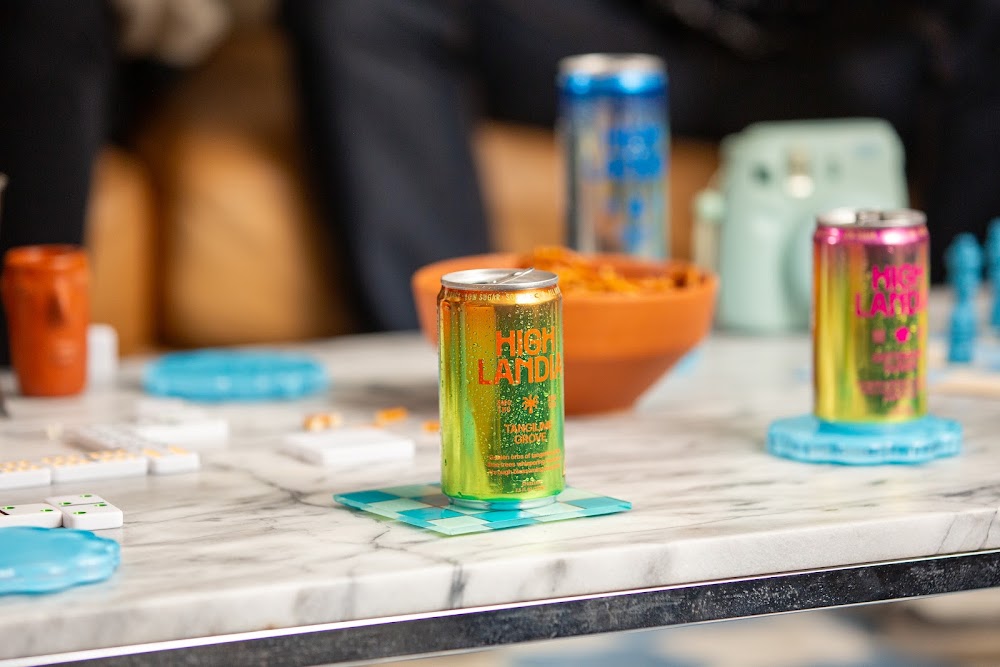
The Highlandia portfolio, Wisconsin-grown:
- Easy Escape (5 mg THC): A low-dose line in three flavor destinations—Cottondew Clouds (gentle, dreamy), Rocket Peak (cherry-lime-blue raspberry, bright and bold), and Tangilime Grove (citrus-forward, tangy). Perfect for the Wisconsin bar-goer who wants to sip socially without the hangover or the evening that got away from them.
- Bold Escape (50 mg THC): The same three flavor worlds, dialed up to 50 mg for experienced travelers and intentional evenings. One can, one destination, no return ticket required.
- Free Spirit (0-ABV mixer): A THC-free elixir built for bartenders, home mixologists, and anyone navigating the regulatory shifts ahead. As the November 2026 federal cap looms, Free Spirit offers Wisconsin bars a compliant, versatile base that can be paired with other legal ingredients or simply enjoyed as a sophisticated zero-proof cocktail component.
Showing up where it matters:
We don't just ship to Wisconsin—we show up. Highlandia runs local events across the state: pop-ups at summer festivals, tastings in partnership with forward-thinking bars, activations at farmers markets and music venues. We believe the best way to introduce someone to Highlandia isn't through an Instagram ad—it's by handing them a cold can at a Milwaukee block party, walking them through the flavor map at a Madison bar, or pouring samples at a Kenosha community event
That presence adds up. Today, you’ll find Highlandia in more than 200 locations across Wisconsin—from retail shelves at stores like Total Wine & Spirits and Fresh Thyme, to hotels like the Hilton Garden Inn, to bars and restaurants like Carnevor and 3rd Street Market. Whether you’re stocking up for the week or ordering one with dinner, odds are there’s a Highlandia pour closer than you think.

This is hospitality, Wisconsin-style. We're the Department of Travel and Tourism for a land that floats just above reality, and our ticket counter is wherever curious people gather. That's the Highlandia ethos, and it's why we're proud to call Wisconsin home.
And being from here means showing up here. You’ll catch Highlandia pouring across the state all season long: we partnered on Christian Yelich’s Home Plate Charity Concert at Landmark Credit Union Live in Milwaukee, brought our THC elixir to the crowds at Milwaukee PrideFest, and kept the evening going at a VIP afterparty at The Trade Hotel downtown. From a Kenosha home base to festival grounds and charity stages, the throughline never changes—find the people, pour something good, and treat the night like an open trail.
Wisconsin vs. Minnesota and Illinois: Three Paths, Three Markets
Wisconsin doesn't exist in a vacuum. Flanked by Minnesota to the west and Illinois to the south, the Badger State offers a useful case study in how different regulatory frameworks shape cannabis beverage markets.
Minnesota: Rules with room to grow
Minnesota legalized "lower-potency hemp edibles" in 2022 and quickly built out a structured regime: 5 mg THC per serving, up to 10 mg per beverage container (sold as two servings), age-21 limits, product registration, and an Office of Cannabis Management to oversee it all. The framework is clear, tested, and—importantly—generating serious revenue. First-year data suggests Minnesota's LPHE market topped $130 million, with beverages estimated to account for roughly half.
The trade-off? Tighter caps on potency and more compliance overhead. But also: consumer confidence, retailer clarity, and a blueprint other states are studying.
Illinois: The dispensary-only route
Illinois chose full adult-use cannabis legalization and funneled all cannabis beverages through licensed dispensaries. That means higher taxes, stricter supply-chain controls, and limited retail access compared to Wisconsin's bar-and-liquor-store model. Recently, Chicago restricted intoxicating hemp products via city ordinance, and state lawmakers continue to debate statewide hemp regulation—signaling Illinois may tighten further rather than open wider.
Wisconsin: The open frontier (with a clock ticking)
Wisconsin's approach—federal hemp compliance, minimal state-specific rules, and retail everywhere—created the most accessible market of the three. That accessibility fueled rapid growth but also uncertainty: no standard potency labels, variable age enforcement, and regulatory gaps that leave some consumers and operators navigating by feel.
Come November 12, 2026, that openness may close sharply unless Wisconsin lawmakers act to create a state framework that accommodates beverages above the 0.4 mg federal cap. Bipartisan bills introduced late in 2025 suggest momentum for age-21 rules, testing/labeling standards, and retail-channel definitions—a Wisconsin-flavored compromise that could preserve the market's bar-friendly culture while adding guardrails.
What's Next for THC Drinks in Wisconsin in 2026
The weather in Highlandia today is pleasantly unreal, with a 90% chance of regulatory thunderstorms by November. Here's what explorers, bar owners, and beverage lovers should watch as Wisconsin's THC drink story enters its next chapter.
The November 12 federal deadline:
Mark your calendar. On that date, federal law shifts hemp's definition to a total-THC standard and caps products at 0.4 mg total THC per container to remain classified as "hemp." Any beverage above that threshold will need to comply with state cannabis law—or disappear from shelves.
For Wisconsin, which has no adult-use cannabis program and no clear "medium-dose hemp beverage" pathway as of June 2026, that's a problem. Unless state lawmakers pass legislation creating a legal home for 5 mg, 10 mg, or 50 mg drinks, the market could collapse overnight or fragment into a patchwork of local ordinances.
Brands are already preparing. Reformulations, new SKUs under 0.4 mg, and contingency distribution plans are underway. At Highlandia, our Free Spirit 0-ABV mixer is part of that hedge—a compliant, versatile product that works within any regulatory framework and positions us to adapt as the rules settle.
State legislation in motion:
Wisconsin lawmakers introduced multiple bills in late 2025 to regulate intoxicating hemp products. Key proposals include:
- Age-21 purchase requirements statewide
- Mandatory lab testing and COA transparency
- Child-resistant packaging and labeling standards
- Defined retail channels (bars, liquor stores, potentially others)
- Local licensing or state registration for hemp beverage sellers
The outcome will determine whether Wisconsin keeps its bar-friendly, retail-accessible THC drink culture or pivots toward something closer to Minnesota's controlled model. Either way, the days of zero statewide rules are numbered.
On-premise evolution:
Expect THC on tap to grow through 2026, with more Wisconsin bars adding draft systems, menu integrations, and server training around dosing and intervals. The "sober curious" movement and moderation culture are tailwinds here—THC drinks offer bars a revenue stream that doesn't rely on alcohol and appeals to customers seeking a different kind of buzz.
Smart operators will adopt voluntary age-gating, transparent dosing signage, and house policies on responsible service now, rather than wait for mandates.
Brand differentiation and trust:
As the market matures and regulations tighten, consumers will gravitate toward brands that demonstrate quality, transparency, and local commitment. Third-party COAs, ingredient clarity, consistent dosing, and—crucially—showing up in person will separate the portals from the pretenders.
That's why we keep our boots on the ground across Wisconsin. That's why every Highlandia can lists its THC content clearly and links to lab results. That's why we treat this like hospitality, not a land grab. We're here for the long trail, not the quick exit.
The Trail Ahead
Wisconsin didn't set out to become one of America's biggest THC drink markets. It just opened the door, trusted its people to walk through responsibly, and watched an industry bloom in bars, liquor stores, and festival tents from Kenosha to Superior.
The next chapter will be more structured, more scrutinized, and—if we're being honest—more complicated. Federal caps, state bills, municipal rules, and evolving consumer expectations will all reshape the landscape. But that's not a reason to worry. It's a reason to pay attention, to adapt thoughtfully, and to keep showing up for the people who cracked open their first THC drink in a Wisconsin tavern and thought, "Wait—this changes things."
Because it does.
Here in Highlandia, we believe the best journeys aren't the ones that avoid uncertainty—they're the ones that meet it with curiosity, a sense of humor, and a cold drink in hand. Wisconsin taught us that. And whether you're a bar owner planning your fall menu, a legislator drafting the next hemp bill, or a traveler wondering what all the fuss is about, we invite you to explore what's possible when you treat a beverage like a portal and an evening like an open trail.
The weather in Wisconsin today is partly cloudy with a 100% chance of something interesting. Crack a can. See where it takes you.
Read more
There's a moment when the evening softens and the version of yourself you prefer shows up. Maybe it's the conversation that turns good, the playlist that finally clicks, or the simple fact that you...
You're standing at the edge of your evening, looking at two doors. Behind one: the familiar hum of alcohol—the buzz you know, the headache you've met before, the calories you've stopped counting. B...